Who Is Really Heating Abia’s Polity? Otti, LP Face Hypocrisy Claims
“What is happening in Abia’s political space?
A political debate is unfolding in Abia State over claims of selective outrage and hypocrisy, with critics accusing Governor Alex Otti and the Labour Party of responding inconsistently to security concerns and political tensions, while allegedly remaining silent on other serious incidents.”
“Tensions are rising in Abia State as accusations of political hypocrisy and selective outrage take center stage, with critics questioning whether those in power are truly committed to peace—or simply reacting when it suits their interests. As allegations of silence over violence and double standards grow louder, the debate over who is really “heating the polity” is becoming impossible to ignore.”
By George Maduka

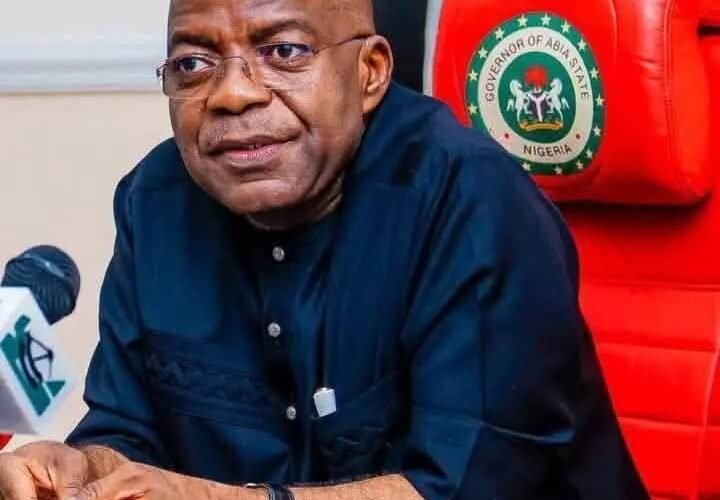
Amid the shifting political dynamics of Abia State, a troubling pattern has emerged. One defined not by principle, but by selective outrage, convenient morality, and brazen hypocrisy. The recent chorus of criticism directed at Senator Orji Uzor Kalu by the Labour Party (LP), Governor Alex Otti, former Deputy Governor Ude Oko Chukwu, and the ever-controversial David Ogba Onuoha Bourdex, is not only disingenuous but profoundly revealing.
At the heart of this orchestrated indignation lies a paradox: those who now posture as custodians of peace were conspicuously silent when the polity was truly under threat. This is the essence of hypokrisis. It is this very hypokrisis that defines the current political conduct of Abia’s Labour Party establishment.
Where were these self-appointed defenders of democracy when political actors sponsored vulnerable elderly women to chant death wishes against Senator Kalu? Where was the moral outrage when youths in Ohafia were incited to threaten violence and openly declare intentions to eliminate anyone associated with him? Silence prevailed. Deafening, calculated silence.
Yet, the moment Senator Kalu, widely known for his measured and peaceful disposition reassured his supporters that they would be defended within the bounds of the law, the same voices suddenly found urgency. This is not patriotism; it is opportunism. It is kairos abused; the manipulation of timing for political advantage.
Where were Governor Otti and his allies when serious allegations emerged linking the Deputy Governor, Ikechukwu Emetu, to the humiliation and flogging of a former governor, Uduma Uguru? Till date, no decisive response has been offered to petitions surrounding that incident. The silence is not incidental; it is instructive.
Where were they when a young man from Ohafia publicly cried out, alleging that his life was under threat from powerful political actors? Today, that young man is dead; shot under circumstances that demand urgent and transparent investigation. Yet, no outrage. No press conferences. No moral lectures about “heating the polity.” Such silence speaks louder than any statement—it is aletheia denied, truth suppressed.
Even more disturbing is the apparent normalisation of incendiary rhetoric when it originates from within their own ranks. When Governor Otti told political opponents to “write their will” ahead of 2027, where was the Labour Party’s sudden love for peace? Where was Ude Oko Chukwu’s call for restraint? Where was the caution against inflammatory language?
One must ask: is peace only threatened when Senator Kalu speaks? Or is peace selectively defined to suit political expediency?
There are growing concerns widely whispered across communities in Ohafia and Arochukwu about the regrouping of non-state actors and the circulation of voice notes threatening violence against those who may vote for opposition parties, particularly the APC. If these claims hold even a fraction of truth, then the silence of those in authority is not just hypocrisy, it is complicity.
This is where the concept of dikaiosyne; justice, fairness, moral order–must guide public discourse. A polity cannot thrive where justice is selective, where outrage is partisan, and where truth is sacrificed on the altar of political convenience.
Senator Orji Uzor Kalu has, over time, demonstrated restraint in the face of sustained provocation. His recent remarks, far from being a call to violence, were a reaffirmation of a fundamental democratic principle: that the will of the people must be protected. To twist this into a narrative of incitement is not only intellectually dishonest but politically dangerous.
What Abia needs at this critical juncture is not manufactured outrage, but honest introspection. The Labour Party, already fractured into factions, must resist the temptation to weaponise propaganda as a substitute for governance. Governor Alex Otti must rise above partisan defensiveness and address legitimate concerns about security, political tolerance, and accountability.
In the final analysis, Abians are not deceived. They understand the difference between genuine concern and calculated distraction. They know that peace is not the absence of political disagreement, but the presence of justice, fairness, and truth.
Anything less is theatre.
And Abia deserves better.
George Maduka writes from Abuja.