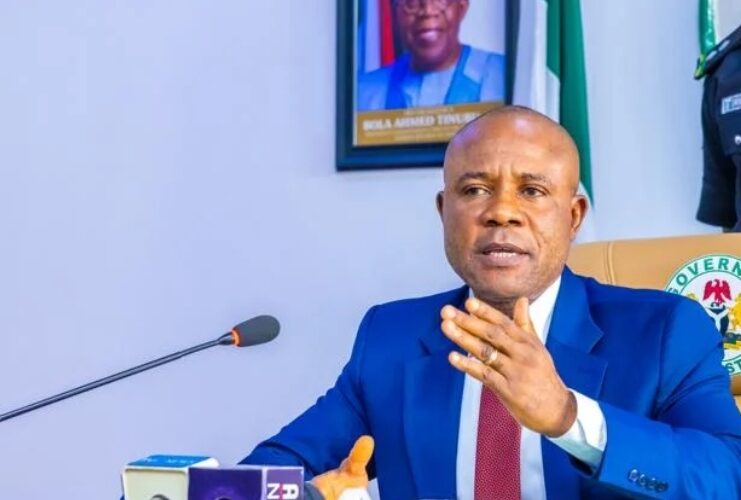
Three years ago, the people of Enugu State entrusted the destiny of their beloved state to a man whose campaign mantra resonated deeply with the hopes and aspirations of Ndi Enugu: “Tomorrow Is Here.” At the time, many embraced the slogan as an audacious declaration of intent. Others regarded it as a rallying cry meant to inspire confidence in the possibilities of governance driven by innovation, courage, competence, and purpose.
Today, three years into the administration of Governor Peter Ndubuisi Mbah, that declaration has evolved from a political mantra into a living reality that can be seen, felt, and measured across the length and breadth of Enugu State.
Indeed, the story of Enugu State under Governor Peter Mbah is increasingly becoming the story of transformation powered by vision, discipline, strategic planning, and an uncommon commitment to service. It is the story of a state deliberately redefining itself, repositioning its institutions, modernizing its infrastructure, empowering its people, and restoring confidence in the possibilities of governance.
Three years on, Enugu State stands as a tapestry woven together by the threads of purposeful leadership, institutional reforms, infrastructural renaissance, economic revitalization, technological advancement, educational innovation, improved healthcare delivery, and a renewed social contract between government and citizens.
Leadership is often tested not by promises made during campaigns but by the courage and capacity to translate those promises into tangible outcomes. In Governor Peter Mbah, Enugu State found a leader determined not merely to administer government but to fundamentally rethink governance itself.
From the onset, his administration articulated a bold vision: to grow the economy of Enugu State from approximately $4.4 billion to a $30 billion economy within a few years through private-sector-led growth, aggressive infrastructural development, human capital investment, security enhancement, and institutional efficiency. It was an ambitious target. Yet, what has distinguished the administration over the past three years is not merely the boldness of its aspirations, but the methodical and strategic manner in which it has pursued them.
At the heart of Governor Mbah’s governance philosophy lies a clear understanding that development cannot occur in isolation from infrastructure. Roads, transportation networks, smart urban planning, water systems, power infrastructure, and public utilities form the foundation upon which economic growth and social advancement are built. This understanding has fueled one of the most aggressive infrastructural renewal programmes in Enugu State’s recent history.
Across urban and rural communities alike, roads that once symbolized neglect are being reconstructed into durable arteries of commerce and connectivity. New roads are opening up previously underserved communities, stimulating trade, reducing travel time, and reconnecting citizens to economic opportunities. Urban renewal projects within Enugu metropolis are transforming the face of the capital city into a modern, investor-friendly environment capable of supporting increased economic activity and urban expansion. The administration’s commitment to infrastructure is not cosmetic; it is strategic. Every road built, every drainage system constructed, every transport corridor improved is tied to a broader vision of creating an enabling environment for business growth and improved quality of life.
One of the most remarkable dimensions of Governor Peter Mbah’s leadership has been his relentless pursuit of modern governance driven by technology and innovation. In an era where technology increasingly determines competitiveness and efficiency, Enugu State under Mbah has embraced digital transformation as a critical pillar of governance. The state’s movement toward smart schools with the target of 260 Smart Schools (one Smart School per Ward) almost completely met, with digital learning systems; automated governance platforms; and data-driven administration, Governor Peter Ndubuisi Mbah’s watch reflects a leadership deeply aware of the future and determined to prepare its people for it.
Perhaps nowhere is this futuristic vision more evident than in the administration’s bold educational reforms. Education under Governor Mbah is no longer treated as a mere social service; it is viewed as the principal engine of human capital development and economic competitiveness. The Smart Green Schools initiative represents one of the most ambitious educational interventions in Nigeria today. Conceived as technologically advanced learning environments equipped with digital tools, renewable energy solutions, modern teaching methods, and integrated healthcare facilities, these schools are redefining public education in Enugu State.
The significance of the Smart Green Schools initiative goes beyond infrastructure. It reflects a philosophical shift in governance – an acknowledgment that the future belongs to societies capable of equipping their children with the knowledge, technological skills, creativity, and confidence required in a rapidly changing global economy. Governor Mbah’s administration understands that investing in children today is equivalent to securing the prosperity of Enugu tomorrow. Through this initiative, Enugu is laying the foundation for a generation that can compete globally while remaining rooted in the values of excellence, discipline, innovation, and service.
Equally transformative has been the administration’s intervention in the healthcare sector. For decades, access to quality healthcare remained a major challenge in many communities. Primary healthcare centres suffered from poor infrastructure, inadequate staffing, and limited equipment. Governor Peter Mbah’s government has moved decisively to reverse this trend by embarking on comprehensive healthcare reforms designed to strengthen primary healthcare delivery and expand access to quality medical services.
The audacious building of 260 Type-2 Primary Healthcare Centres (PHCs) across Enugu State – one in each of the state’s 260 political wards is not only transformational but revolutionary and redemptive.
The construction and revitalization of healthcare facilities across the state reflect a government committed to protecting the dignity and wellbeing of its people. Modern healthcare infrastructure, improved medical equipment, enhanced staffing, and strategic investments in health systems are gradually restoring confidence in public healthcare institutions. By integrating healthcare services into broader developmental planning, the administration demonstrates an understanding that a healthy population is essential for productivity, economic growth, and social stability.
Security has also emerged as one of the defining priorities of the Mbah administration. No society can thrive in an atmosphere of fear, insecurity, or instability. Recognizing this reality, Governor Mbah has pursued a multidimensional security strategy aimed at safeguarding lives and property while creating conditions necessary for economic expansion and social harmony. Investments in surveillance systems, security infrastructure, inter-agency collaboration, and intelligence gathering have significantly strengthened the state’s security architecture.
The administration’s firm stance against criminality has helped restore confidence among investors, businesses, and ordinary citizens. Markets are more active, businesses operate with greater confidence, and communities increasingly feel the presence of a government determined to defend law and order. Security under Governor Mbah is not viewed solely through the lens of enforcement; it is also tied to economic opportunity, youth empowerment, and social inclusion. This integrated approach reflects a sophisticated understanding of the root causes of insecurity and the long-term measures required to sustain peace.
Economic transformation remains the central pillar upon which many of the administration’s initiatives converge. Governor Peter Mbah came into office with a clear understanding that government cannot sustainably create prosperity without catalyzing private sector growth. Consequently, his administration has aggressively pursued policies aimed at attracting investments, supporting entrepreneurship, expanding economic opportunities, and improving the ease of doing business.
Enugu State is increasingly positioning itself as a preferred destination for investors seeking stability, infrastructure, skilled manpower, and efficient governance. Through strategic partnerships, policy reforms, and targeted investments, the administration has sought to unlock the vast economic potential of the state across sectors such as agriculture, commerce, manufacturing, tourism, technology, energy, and real estate. The focus on internally generated revenue expansion is not driven merely by fiscal necessity; it reflects a broader vision of economic independence and sustainable development.
Agriculture, in particular, has received renewed attention under Governor Mbah’s leadership. Beyond traditional subsistence farming, the administration envisions agriculture as a modern, technology-driven, commercially viable sector capable of generating employment, enhancing food security, and contributing significantly to economic growth. Through investments in agro-processing, mechanized farming, agricultural value chains, and rural infrastructure, the government is creating pathways for farmers and agribusiness entrepreneurs to thrive.
Rural development has also become an important hallmark of the administration. For too long, many rural communities across Nigeria have suffered from infrastructural neglect, limited economic opportunities, and inadequate social services. Governor Peter Mbah’s approach rejects the notion that development should be concentrated solely in urban centres. By extending roads, schools, healthcare facilities, water projects, and economic initiatives into rural communities, the administration is promoting more inclusive growth and reducing the urban-rural development gap.
This inclusive approach to governance reflects a deeper understanding of leadership as a responsibility to all citizens regardless of geography, class, or political affiliation. It demonstrates that true development must be broad-based, participatory, and people-centred. In many communities across Enugu State today, citizens can point to visible signs of government presence and intervention. That renewed visibility has helped strengthen public trust and reinforce the belief that governance can indeed work for the people.
Another defining feature of Governor Peter Mbah’s leadership is his emphasis on efficiency, accountability, and performance. Governance under his administration is increasingly characterized by measurable targets, strategic planning, and result-oriented execution. Ministries, departments, and agencies are expected not merely to function administratively but to deliver outcomes aligned with the broader developmental objectives of the state. This culture of performance management has injected a new sense of urgency and professionalism into public service delivery.
Leadership, however, is not merely about projects and policies; it is also about inspiration. One of the remarkable aspects of Governor Mbah’s administration has been its ability to inspire optimism among citizens. In a country where cynicism toward governance often runs deep, the administration has succeeded in rekindling public belief in the capacity of leadership to drive meaningful change. Citizens increasingly see evidence that governance can be proactive, innovative, responsive, and transformational. This restoration of confidence matters profoundly. Societies progress not only because of physical infrastructure but also because of collective belief in the future. When citizens believe that tomorrow can indeed be better than today, they become more willing to invest, innovate, collaborate, and contribute positively to society. Governor Peter Mbah’s “Tomorrow Is Here” philosophy has, in many respects, become a psychological catalyst encouraging Ndi Enugu to reimagine the possibilities of their state.
The administration’s urban modernization efforts further underscore its transformative ambitions. Enugu, historically celebrated as the Coal City, is gradually evolving into a modern urban hub capable of competing with leading cities across Nigeria and beyond. Urban renewal projects, improved transportation systems, environmental sanitation initiatives, smart city planning, and beautification programmes are collectively reshaping the identity of the state capital.
Environmental sustainability has also emerged as an important component of governance under Mbah. The integration of green concepts into educational infrastructure, urban planning, and developmental projects reflects an awareness of the global imperative for sustainable growth. By embedding sustainability into development planning, the administration is positioning Enugu State not merely for immediate progress but for long-term resilience and environmental responsibility.
Youth empowerment occupies a central place in this broader developmental agenda. Governor Mbah’s administration recognizes that the energy, creativity, and talents of young people represent one of the state’s greatest assets. Through investments in education; technology; entrepreneurship support; skills acquisition; sports development (need I state that in three years the Enugu State sponsored Football Club Enugu Rangers have twice emerged the Professional Premier League Champions); and job creation initiatives, the government is working to expand opportunities for the youth population.
This focus on youth empowerment is critical not only economically but socially and politically. A society that empowers its youth builds a stronger foundation for innovation, stability, and democratic participation. By investing in young people today, Enugu State is investing in future leaders, entrepreneurs, professionals, creators, and innovators who will shape the trajectory of the state for generations to come.
Women have also benefited from the administration’s inclusive governance approach. Across sectors, there is growing recognition of the importance of empowering women economically, politically, and socially. Development that excludes women is incomplete and unsustainable. By promoting inclusion and expanding opportunities, the administration reinforces the principle that governance must serve all segments of society equitably.
Another area where Governor Peter Mbah has demonstrated strategic leadership is in fostering partnerships and collaboration. Development in the modern world increasingly requires synergy among government, private sector actors, development partners, civil society organizations, and communities. Rather than operating in isolation, the administration has actively sought partnerships capable of accelerating development outcomes. This collaborative approach reflects maturity in governance and recognition that transformative leadership involves mobilizing collective strengths toward shared goals.
Tourism and cultural promotion also form part of the state’s broader economic and social revitalization strategy. Enugu possesses rich cultural heritage, scenic landscapes, and historical significance capable of attracting visitors and stimulating economic activity. Through infrastructural improvements and strategic positioning, the administration is gradually unlocking opportunities within the tourism and hospitality sectors.
Importantly, Governor Mbah’s leadership style combines vision with execution. Vision without implementation remains rhetoric; implementation without vision lacks direction. What distinguishes the past three years in Enugu State is the administration’s consistent effort to align bold aspirations with practical execution. Projects are not merely announced; they are pursued with determination and urgency. Policies are not designed merely for political optics; they are integrated into a broader developmental framework aimed at measurable impact.
Of course, no administration operates without challenges. Governance in Nigeria today exists within a complex environment shaped by economic pressures, inflationary trends, infrastructural deficits, security concerns, and fiscal constraints. Yet, the true test of leadership lies not in the absence of challenges but in the capacity to confront them with resilience, innovation, and strategic clarity. Governor Peter Mbah’s administration has shown a willingness to tackle difficult issues head-on while maintaining focus on long-term objectives.
The administration’s communication strategy has also played a role in shaping public engagement. By consistently articulating its vision, explaining policy directions, and highlighting developmental milestones, the government has fostered a stronger connection between governance and citizens. Transparency and communication help build trust, manage expectations, and encourage public participation in the developmental process.
As Enugu State marks this three-year milestone, it becomes important to reflect not only on completed projects but on the broader transformation in governance culture. Under Governor Peter Mbah, governance increasingly appears proactive rather than reactive, strategic rather than ad hoc, visionary rather than transactional. This cultural shift may ultimately prove to be one of the administration’s most enduring contributions.
The symbolism embedded in the phrase “Tomorrow Is Here” deserves deeper reflection. In many societies, tomorrow often remains an elusive promise perpetually deferred by poor leadership, institutional decay, and limited ambition. Governor Mbah’s administration challenges that pattern by insisting that development cannot wait indefinitely. The future must be intentionally created through decisive action in the present. Roads must be built now. Schools must be transformed now. Healthcare systems must be strengthened now. Investments must be attracted now. Security must be enhanced now. Opportunities must be expanded now. This sense of urgency has infused the administration with momentum and direction. It has also helped distinguish Enugu State within the broader national conversation about governance and development. Increasingly, observers across Nigeria look toward Enugu as a state attempting to chart a different developmental trajectory anchored on planning, innovation, and institutional reform.
For the ordinary citizen, however, governance is ultimately judged not by speeches but by lived experience. Can children access better schools? Can patients receive improved healthcare? Can farmers transport goods more easily? Can businesses operate with greater confidence? Can communities feel safer? Can young people access opportunities? Can citizens see evidence that public resources are being translated into public value? Across many sectors, the Mbah administration has worked to answer these questions positively.
The transformation underway in Enugu State also carries broader lessons for governance in Nigeria. It demonstrates the importance of leadership driven by competence rather than complacency, innovation rather than stagnation, and long-term vision rather than short-term politics. It underscores the value of planning, execution, accountability, and citizen-centred governance. Most importantly, it reminds Nigerians that transformational leadership remains possible when political authority is combined with clarity of purpose and commitment to service.
Three years into Governor Peter Mbah’s tenure, the emerging narrative is not merely about projects completed or policies initiated. It is about a state consciously redefining its identity and aspirations. It is about citizens rediscovering hope in governance. It is about institutions gradually becoming more responsive and efficient. It is about a leadership philosophy that views development not as a slogan but as a continuous process requiring courage, discipline, and innovation.
As Enugu State journeys toward the future envisioned by its current leadership, the foundations being laid today will likely shape the trajectory of the state for decades to come. The schools being built today will nurture future innovators and leaders. The roads being constructed today will facilitate future commerce and connectivity. The healthcare systems being strengthened today will safeguard future generations. The economic reforms being implemented today will influence future prosperity. The investments in technology and human capital today will determine the competitiveness of tomorrow.
Leadership anniversaries often provide opportunities for both celebration and reflection. In the case of Governor Peter Mbah’s three years in office, they also provide an opportunity to appreciate the possibilities that emerge when governance is anchored on vision, competence, and execution. While much work undoubtedly remains to be done, the trajectory established over the past three years offers strong evidence of a government determined to move Enugu State forward decisively.
History often remembers leaders not merely for occupying office but for altering the direction of society. Governor Peter Mbah’s administration appears increasingly focused on ensuring that Enugu State’s story becomes one of transformation, resilience, innovation, and progress. Through strategic investments, institutional reforms, infrastructural development, and people-centred governance, the administration is attempting to build not only projects but a legacy of purposeful leadership.
As citizens reflect on the past three years, many can see tangible evidence of movement, momentum, and modernization. Communities once overlooked are witnessing renewed attention. Public institutions are undergoing reform. Infrastructure is expanding. Economic opportunities are broadening. Governance is becoming more technology-driven and performance-oriented. Confidence in the future is growing. The phrase “Tomorrow Is Here” therefore resonates today with deeper meaning than ever before. It is no longer simply an aspirational slogan; it is increasingly becoming a description of a state in transition – a state striving to align present realities with future possibilities. It captures the spirit of an administration determined to compress development timelines and accelerate progress. It reflects a leadership philosophy rooted in urgency, ambition, and execution.
Three years on, Enugu State stands as a compelling illustration of what committed and visionary leadership can achieve when guided by strategic thinking, courage, and unwavering focus on the public good. The tapestry being woven across the state is rich with the colours of development, reform, innovation, resilience, and hope. Every road reconstructed, every school modernized, every healthcare facility revitalized, every investment attracted, every community empowered, and every institution strengthened adds another thread to this evolving tapestry of transformation.
In the final analysis, the true significance of Governor Peter Mbah’s three-year anniversary lies not merely in celebrating accomplishments but in recognizing the broader shift in governance culture taking place in Enugu State. It lies in acknowledging a renewed belief that leadership can indeed be purposeful, visionary, disciplined, and transformational. It lies in appreciating the emergence of a governance model that seeks not merely to manage the present but to actively create the future.
And so, as Enugu State marks this important milestone, one truth echoes powerfully across its towns, cities, and communities: tomorrow is no longer distant. Tomorrow is unfolding now through deliberate leadership, strategic action, and collective aspiration. Tomorrow is here.
Indeed, three years on, Enugu State stands proudly as a tapestry of committed and visionary leadership under Governor Peter Ndubuisi Mbah – a tapestry still unfolding, still evolving, and still inspiring hope for an even brighter future ahead.
Keep MAKING A DIFFERENCE (MAD) my Dear Brother and Friend Governor Peter Ndubuisi Mbah; as you celebrate 3 years in office, and God willing your 4th year, and as you resoundingly win re-election next year on account of your halcyon strides in leadership, posterity and history shall generously give you the flowers you deserve. HAPPY ANNIVERSARY MY DEAR BROTHER.
Chris Mustapha Nwaokobia Jnr.
A Good Governance Advocate. Leadership Trainer. And Publicist.

For publication of your news content, articles, videos or any other newsworthy materials, please send to famousreporters@gmail.com. For more enquiries, please call/WhatsApp: +2347034989575.