Sanwo-Olu and the Power of Intentional Governance in Lagos
By Oluwaseyi Adedotun
“Governor Babajide Sanwo-Olu’s intentional governance is transforming Lagos through integrated transport, education, health, culture, security, and enterprise policies—positioning the city as a global economic and cultural hub.”
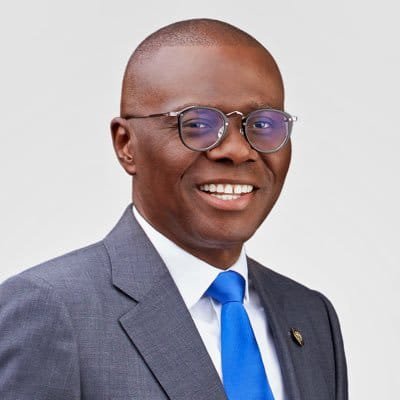
Behind the steadily evolving Lagos is a governor who governs with clarity, purpose, and precision. Governor Babajide Sanwo-Olu has distinguished his leadership not merely by the volume of projects delivered, but by the intentional alignment of vision, policy, and institutions toward a deliberate and sustainable transformation of Africa’s largest city.

When Sanwo-Olu assumed office, he inherited a vast megacity defined by enormous potential and deeply complex challenges. Lagos offered no grace period. Governance demanded immediate action, real-time problem-solving, and long-term strategic thinking. That reality shaped an approach to leadership that blends hands-on execution with institutional planning, ensuring that policies function as interconnected levers of development, not isolated interventions.
Under Sanwo-Olu, governance in Lagos has shifted from reactionary responses to proactive, systems-driven solutions. Social services—transportation, education, health, housing, security, agriculture, arts and culture, and enterprise development—are designed to reinforce one another.
Sustainability is built into the architecture of governance so that reforms and institutions endure beyond electoral cycles.
This philosophy is articulated through the administration’s development framework, THEMES Agenda, later expanded to THEMES+ to embed social inclusion, gender equity, and youth empowerment. The agenda integrates Transportation and Traffic Management; Health and Environment; Education and Technology; Making Lagos a 21st-Century Economy; Entertainment and Tourism; and Security and Governance.
Through this framework, Lagos is governed as a living system—where infrastructure drives commerce, education fuels enterprise, culture powers tourism, health safeguards productivity, housing restores dignity, and governance ensures continuity.
Transportation as an Economic Strategy
Transportation best illustrates intentional governance in action. Lagos has transitioned from reactive traffic management to a multimodal mobility ecosystem, integrating rail, road, and waterways as economic enablers.
The Blue Line (Marina–Mile 2) and Red Line (Ebute Metta–Badagry corridor) have transported millions of commuters, reduced travel time, eased congestion, and unlocked new commercial corridors. Planning for the Green Line and the Fourth Mainland Bridge goes beyond traffic flow—it is about reshaping Lagos’ economic geography, lowering logistics costs, and integrating mainland communities with island business districts.
Road infrastructure is deliberately designed to complement rail investments. Projects like the Opebi–Odo Iyaláro–Ojota Link Road and Bridge (Opebi–Mende Link Road) have created vital east–west connectivity, opened new economic zones, and shortened travel times.
Across Alimosho, Ifako-Ijaiye, Amuwo-Odofin, Badagry, Ebute Metta, Yaba, Mushin, Oshodi, Ikeja, and Agege, rail-grade separation bridges and road upgrades are embedded within a unified transport design that enhances safety, supports micro-economies, and promotes inclusive commerce.
Health, Education and Human Capital
Health policy under Sanwo-Olu reflects the same integrated thinking. The revitalisation of facilities such as the historic Massey Street Children’s Hospital is not merely infrastructural—it is a strategic investment in child survival, maternal health, and long-term productivity.
Combined with the Ilera Eko Health Insurance Scheme and upgraded general hospitals, Lagos is building a health system that reduces catastrophic health spending and anchors economic growth on a healthy population.
Education has been intentionally reshaped to produce economically empowered citizens, not just certificate holders. The reintroduction of the Comprehensive Secondary School model and the expansion of technical and vocational education through the Lagos State Technical and Vocational Education Board reflect a deliberate shift toward skills-based learning.
By aligning education with industry needs, Lagos is strengthening its MSME, manufacturing, technology, and creative sectors—positioning classrooms as engines of productivity.
Culture, Creativity and Global Recognition
Lagos’ emergence as one of the world’s top art destinations for 2026, as named by Artsy, is the product of deliberate cultural policy. From inception, Sanwo-Olu positioned arts, culture, and entertainment as drivers of employment, tourism, global branding, and urban identity.
Flagship initiatives such as ART X Lagos, the Lagos Biennial, the Àkẹ́tẹ̀ Collection, and major cultural festivals—including Eyo (Adamu Orisa) and the Door of Return—have transformed Lagos into a year-round cultural destination.
Culture is treated as economic infrastructure, and identity as a strategic asset. In 2026, Lagos will join cities like Venice, Sydney, and Doha on the global art itinerary—an outcome of intentional governance, not coincidence.
Agriculture, Housing and Security as Enablers
In agriculture and food security, the Produce for Lagos agreement with Niger State exemplifies regional economic strategy.
Supported by a ₦500 billion agro-investment window, Lagos is strengthening food availability, affordability, and supply chain resilience while empowering farmers beyond its borders.
Housing policy is equally intentional. With over 12,000 housing units delivered, the administration has linked shelter to productivity, reduced commuting burdens, stabilised communities, and promoted inclusive growth. These are integrated developments, intentionally connected to transport, services, and employment opportunities.
Security is pursued as an economic enabler. Through institutional coordination, technology deployment, and community partnerships—supported by the Lagos State Security Trust Fund (LSSTF)—public safety has been strengthened. The state has recorded only one bank robbery in seven years, underscoring the effectiveness of intelligence-driven security governance.
Social Inclusion and Enterprise Development
Social safety is treated as strategy, not charity. Programmes like EkoCares and enterprise development initiatives have deepened Lagos’ MSME ecosystem, particularly for women and youth.
Between 2024 and 2025 alone, 5,309 trainees graduated across 211 skills acquisition centres, with over 30,000 Lagosians trained in the last five to six years—interventions that reduce unemployment, strengthen social stability, and expand Nigeria’s economic base.
A Model of Intentional Leadership
Sanwo-Olu’s leadership is defined by visibility, service, and measurable impact. His administration evaluates success by lived realities—resilience, opportunity, and the daily experiences of Lagosians.
Under his stewardship, Lagos has emerged as a global economic heavyweight, with a GDP estimated at US$259.75 billion (PPP), ranking among Africa’s largest urban economies.
National commendations, including from President Bola Tinubu, affirm Lagos’ contribution to Nigeria’s broader development goals.
What defines Lagos today is intentional governance in action—integration, sustainability, and strategic foresight. From transport that fuels commerce, to skills-driven education, regional food systems, cultural diplomacy, health infrastructure, housing dignity, and enterprise growth, governance in Lagos has become a deliberate tool for transformation.