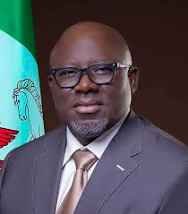
Oborevwori’s WAEC Certificates, INEC Affidavit Raise Fresh Qualification Questions
A fresh controversy over Delta State Governor Sheriff Oborevwori’s educational records has raised questions about the consistency of his declarations to INEC, particularly over his reported Master’s degree and WAEC certificates allegedly submitted during previous election cycles.
Sheriff Oborevwori’s educational qualifications are facing fresh scrutiny following questions over an alleged INEC affidavit, his reported Master’s degree in Political Science and WAEC certificates allegedly submitted in 2015, 2019 and 2023. The claims remain subject to verification against original INEC, WAEC and affidavit records.
ASABA — Fresh questions have emerged over the educational qualifications declared by Delta State Governor, Sheriff Oborevwori Francis Orowhedor, in documents connected to his candidature for the office of governor.
The controversy centres on an alleged affidavit in support of the particulars of persons seeking election to the office of governor, in which Oborevwori is reportedly said to have declared that he had no primary or secondary school education while also stating that he obtained a Master’s degree in Political Science.
The apparent discrepancy has raised questions about how the governor’s educational qualifications were obtained and subsequently presented in documents submitted in connection with his electoral candidature.
At the heart of the issue is a simple but significant question: How could a candidate declare a Master’s degree without clearly stating the primary and secondary educational qualifications through which the degree was obtained?
The matter has attracted further attention following a reported declaration that Oborevwori had never submitted a forged certificate to the Independent National Electoral Commission (INEC).
However, questions are now being raised over WAEC certificates allegedly submitted in his name to INEC in 2015, 2019 and 2023.
The authenticity of the certificates, as well as the circumstances under which they were allegedly submitted, has therefore become a subject of renewed scrutiny.
Another question that has emerged is whether the WAEC certificates allegedly submitted during previous election cycles were included in, or properly accounted for, in the governor’s latest declaration.
If such certificates were indeed submitted to INEC in previous elections, questions may arise as to why they are not clearly reflected or explained in the current declaration.
The issue is significant because candidates’ educational qualifications and other statutory documents form part of the records submitted to the electoral commission in the course of seeking elective office.
However, the claims currently circulating require careful verification.
The original affidavit, the documents allegedly submitted to INEC and relevant records from the West African Examinations Council (WAEC) would need to be examined before any definitive conclusion can be reached.
Until those records are independently verified, the allegations concerning the certificates cannot be treated as established facts.
What remains, however, is an apparent discrepancy that has generated questions about the governor’s educational declarations.
The development is therefore likely to attract further public and legal scrutiny, with stakeholders expected to seek clarification from Governor Oborevwori and the relevant electoral authorities.
For now, the central question remains whether the various educational declarations and certificates attributed to the governor are consistent across the different documents submitted to INEC over the years.

For publication of your news content, articles, videos or any other newsworthy materials, please send to famousreporters@gmail.com. For more enquiries, please call/WhatsApp: +2347034989575.