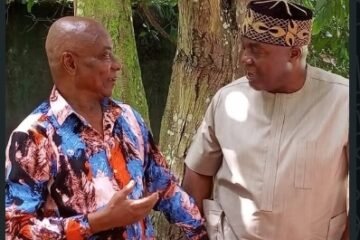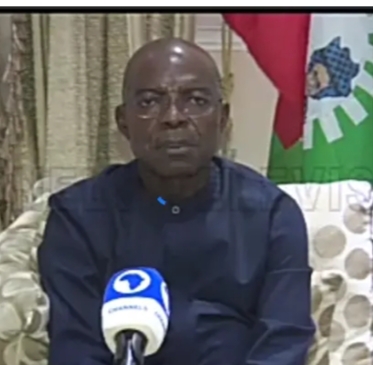
Obi, Tinubu and Alex Otti: Inside Abia Governor’s 2027 Political Dilemma
By Christopher Maduka
Peter Obi’s 2023 political wave helped transform the Labour Party into a national force and reshaped Nigeria’s electoral conversation. Now, as the 2027 presidential election approaches, Governor Alex Otti faces growing questions about his political allegiance, his relationship with President Bola Tinubu and the future of the movement that helped propel his party to power. Will he clarify his position, or will uncertainty continue to fuel speculation?
Why has Governor Alex Otti yet to clearly identify his preferred presidential candidate for 2027? His relationship with Tinubu and the Labour Party’s future are raising fresh questions.
The political wave unleashed by Peter Obi during Nigeria’s 2023 presidential election fundamentally altered the country’s political landscape. It challenged the long-held assumption that electoral victory belonged primarily to political godfathers, established party structures and candidates backed by decades-old political machinery.
Millions of Nigerians who had become disillusioned with the political establishment found a new reason to participate in the electoral process. Their mobilisation sent shock waves through the country’s dominant political parties and demonstrated that a determined electorate could challenge conventional political calculations.
The Labour Party became the principal vehicle for much of that momentum. In Kaduna State, Donatus Mathew, popularly associated with his work as an okada rider, defeated a four-term incumbent to win the Kaura Federal Constituency seat in the House of Representatives. In the Federal Capital Territory, Ireti Kingibe secured a Senate seat on the Labour Party platform. Other party candidates also won legislative seats amid the enthusiasm surrounding Obi’s candidacy.
The message was unmistakable: Nigerian voters were prepared to challenge the established political order.
In Abia State, Governor Alex Otti emerged as one of the most prominent beneficiaries of that political realignment. His victory in 2023 reflected years of political perseverance, his own support base and a wider public appetite for change. The Obidient movement gave the Labour Party unprecedented visibility and strengthened the perception that it could offer an alternative to the country’s dominant political parties.
Otti did not win in a political vacuum. That reality makes the questions surrounding his current positioning ahead of the 2027 presidential election particularly significant.
A governor who will not name his presidential candidate?
With the 2027 election approaching, Abians have a legitimate question for their governor: Where does Alex Otti stand in the contest between Peter Obi’s political aspiration and President Bola Tinubu’s bid for a second term?
The question is not merely about personalities. It concerns political accountability, consistency and the expectations of voters who supported the Labour Party’s promise of a different direction for Nigeria.
In September 2026, Otti reportedly said he was not in a position to oppose Tinubu’s second-term ambition. In an interview released by Arise News, he distinguished cooperation with the Federal Government from partisan endorsement, while indicating that he had a presidential candidate he was expected to support.
He also acknowledged Tinubu’s constitutional right to seek re-election.
On the surface, the position appears reasonable. State governors must work with the Federal Government regardless of party affiliation. Infrastructure projects must proceed, security cooperation must continue, and states must pursue the federal resources needed to deliver public services.
No responsible observer should expect Otti to manufacture unnecessary hostility towards the President simply to demonstrate his opposition credentials.
However, there is a significant difference between cooperating with an incumbent president and declaring oneself unable to oppose his re-election.
The first reflects the practical demands of governance. The second raises questions about political positioning.
Why would a governor elected on an opposition platform be willing to explain why he cannot oppose the ruling party’s presidential candidate, yet leave the public guessing about the candidate he intends to support?
If Otti has already identified his preferred presidential candidate, Abians deserve to know who that person is.
Can he state his position clearly, without qualifications that leave voters uncertain about his intentions?
The campaign council list that raises fresh questions
The controversy acquired another dimension on October 14, 2026, when Tinubu reportedly inaugurated an expanded Presidential Campaign Council at the Presidential Villa in Abuja.
According to reports, the council’s membership extended beyond the President’s immediate party base and included prominent political figures associated with other parties.
Among the names reportedly listed as general members was Comrade Onyebuchi O. Chukwu, identified as a special assistant to Governor Otti on Youth Development.
The Whistler reported that Chukwu expressed surprise at his inclusion, saying he had neither been consulted nor informed about the listing. He also reportedly said he had received no directive from the governor concerning the matter and pointed to apparent inconsistencies involving similar names on the list.
His explanation deserves consideration. Inclusion on a published campaign council list does not, by itself, establish that the person concerned accepted the appointment or that the governor authorised it.
Nevertheless, the development raises questions that deserve clear answers.
If a serving aide to an opposition governor appears on the campaign council of the incumbent president, the public is entitled to ask whether the listing was accurate, whether the aide accepted the role and whether the governor’s administration had any involvement.
Otti should clarify whether his appointees are permitted to participate in Tinubu’s re-election campaign in their official capacities or whether any such involvement would be a personal political decision.
If the listing was erroneous or unauthorised, a clear public explanation would help settle the matter.
If other members of the governor’s administration have also been listed, their identities and the circumstances surrounding their inclusion should be established.
The issue is not whether Otti must control every political decision made by his aides. It is whether the governor can clearly distinguish his administration’s position from the individual political choices of its members.
Silence does not prove complicity. But where a political controversy raises reasonable questions about an administration’s direction, transparency is preferable to prolonged speculation.
From the Obi wave to questions about political loyalty
It is important to acknowledge that Peter Obi did not personally produce every Labour Party victory in 2023. Otti had his own political record, supporters, electoral organisation and grassroots appeal.
His eventual victory followed years of political engagement and repeated attempts to secure the governorship.
However, it would be equally misleading to ignore the influence of the Obidient movement on the political environment in which the Labour Party recorded its electoral successes.
Across Nigeria, young people, professionals and previously disengaged voters mobilised around the possibility of a different political direction. That enthusiasm strengthened the Labour Party’s national profile and created opportunities for candidates who might otherwise have struggled to attract comparable attention.
Otti’s victory belonged to the people of Abia State. Yet it also formed part of a wider national movement that challenged the dominance of established political interests.
For voters who associated the Labour Party with that movement, any perceived shift towards the political establishment they opposed is bound to attract scrutiny.
That does not mean Otti owes Obi personal loyalty or that every Labour Party politician must support the same presidential candidate indefinitely.
Political alliances can change. Politicians can disagree with former allies, reconsider their positions and support candidates from other parties.
But political independence should not be confused with evasiveness.
A politician has every right to change his mind. Voters, in turn, have every right to ask why.
A pattern of political hedging?
Otti’s public statements and reported political developments have fuelled further debate about his intentions ahead of 2027.
In January 2026, he reportedly said he remained in the Labour Party while acknowledging uncertainty about the future. In February, he defended the party’s continued relevance despite Obi’s departure. In July, he rejected claims attributed to Imo State Governor Hope Uzodimma that South-East governors had agreed to support Tinubu’s re-election.
In September, Otti reportedly said he was not in a position to oppose Tinubu’s second-term bid. In October, a member of his administration was reported to have appeared on Tinubu’s campaign council list.
Each development requires its own context. Taken together, however, they help explain why questions about the governor’s political direction persist.
Otti has every right to determine his political position independently of Uzodimma or any other South-East governor. Rejecting another governor’s claim about a regional consensus does not automatically amount to an endorsement of Obi.
Similarly, remaining in the Labour Party does not, by itself, settle the question of which presidential candidate Otti will support in 2027.
The distinction matters because party membership, regional political alignment and presidential endorsement are related but separate questions.
The image of Janus, the Roman god depicted with two faces looking in opposite directions, offers a useful metaphor for the uncertainty surrounding Otti’s political positioning.
One side of the debate looks towards the Labour Party supporters who helped create the political momentum of 2023. The other looks towards the Federal Government and the possibilities of cooperation with the incumbent administration.
Whether this reflects deliberate political calculation or simply an unresolved decision remains unclear.
What is clear is that the uncertainty has created room for speculation.
Cooperation is not capitulation
Nigerian governors routinely engage with the Federal Government on infrastructure, security, funding and economic policy. Such engagement is a practical necessity, not an automatic betrayal of opposition politics.
A governor who refuses to cooperate with the President solely because they belong to different parties would risk putting partisan considerations ahead of the interests of the people.
However, cooperation must not become a substitute for political accountability.
An opposition governor can support a sound government policy while criticising a harmful one. He can accept federal assistance while demanding transparency. He can maintain cordial relations with the President while campaigning for another candidate if he believes that candidate offers a better direction for the country.
That is the essence of independent political judgment.
Otti’s reported position on fuel subsidy removal, including the argument that the policy’s sustainability must be considered alongside the availability of adequate funding, is a policy issue that can be debated on its merits. Agreement with the President on a particular economic question does not automatically establish support for his re-election.
The concern arises when repeated explanations about the limits of his opposition to Tinubu are accompanied by uncertainty about his preferred alternative.
The reported appearance of his aide on the presidential campaign council list has added another question to an already unsettled debate.
If Otti’s position is principled, a straightforward explanation should help clarify it.
Abians elected him to govern their state and exercise independent judgment in the public interest. They did not surrender their right to question his political choices simply because he maintains a working relationship with Abuja.
The Federal Government does not own Abia’s political future. Nor does cordial engagement with the President require the governor to leave voters guessing about his presidential preference.
What Otti’s supporters want to know
For many Abians who identify with Obi’s political message, the possibility that Otti could support Tinubu’s re-election would represent a significant disappointment.
To them, Obi’s appeal rests on the promise of greater fiscal discipline, accountable leadership and a departure from entrenched political practices.
Whether Obi can fully deliver on those expectations is a separate question. Like every presidential aspirant, his record, proposals and capacity to govern should be scrutinised.
Nevertheless, the political aspiration associated with his movement remains important to many of its supporters.
For those who propelled the Labour Party into national prominence, an Otti endorsement of Tinubu would raise difficult questions about the meaning of the 2023 election.
Was the movement a genuine demand for a new political direction, or was its electoral strength merely a temporary opportunity for individual politicians to secure office?
Such questions may be uncomfortable, but they are legitimate in a democracy.
Otti is entitled to disagree with Obi. He is entitled to conclude that Tinubu deserves another term. He is also entitled to support another candidate if he believes that candidate would best serve Nigeria.
What he cannot reasonably expect is public approval without public scrutiny.
Political choices have consequences, and voters are entitled to assess those choices against the commitments and expectations that shaped their support.
Alex Otti cannot have it both ways
Ambiguity is not always evidence of political sophistication. Sometimes it reflects an unresolved position; sometimes it leaves the public with more questions than answers.
Otti cannot expect the public to distinguish his cooperation with Tinubu from an endorsement of the President’s re-election while declining to clarify his own presidential preference.
Nor should he expect his independence from other South-East governors to shield his decisions from scrutiny.
The question is not whether Otti must follow Obi unquestioningly. It is whether he is prepared to explain the political direction he intends to take.
This matters beyond the relationship between the two men.
Nigeria’s opposition politics continues to face challenges arising from party divisions, defections and competing ambitions. If Otti believes the Labour Party can remain a credible independent political force, he should explain what that independence means in practice.
Will he support the party’s presidential candidate in 2027? Does his position depend on who eventually emerges as the candidate? Will he make his decision based on policy, party loyalty or an assessment of the national interest?
These are reasonable questions for a governor whose political rise was closely associated with a party that presented itself as an alternative to the established political order.
The answers should come from Otti himself, not from speculation about his intentions.
My final word to Governor Otti
Governor Otti, Abians are not asking you to wage a political war against President Tinubu. They are not asking you to jeopardise federal projects or turn governance into a permanent campaign rally.
They are asking for clarity.
Explain whether the reported inclusion of your aide on Tinubu’s campaign council was authorised, accepted or simply the result of an error. Clarify whether other members of your administration have been similarly listed and what position your government takes on such involvement.
More importantly, tell Abians which presidential candidate you intend to support in 2027.
If you support Obi, say so. If you support Tinubu, explain your decision. If you intend to support another candidate, name that person and state your reasons. If you have not made up your mind, say so honestly.
There is nothing inherently wrong with reconsidering a political position. The problem is allowing uncertainty to persist while expecting voters to accept that no explanation is necessary.
Do not mistake the patience of Abians for naivety.
The 2023 election demonstrated that Nigerian voters can challenge political calculations and create opportunities for candidates outside the traditional centres of power. The Labour Party’s success, including Otti’s victory in Abia, formed part of that wider moment.
The electorate can appreciate your performance as governor while independently evaluating your position on the presidential election. Support for your administration does not amount to a blank cheque on national politics.
Until you clarify your intentions, questions about a possible accommodation with Tinubu’s second-term ambition will remain.
If those suspicions are misplaced, you are in the best position to correct them.
Christopher Maduka can be contacted at chrismadu58@gmail.com.

For publication of your news content, articles, videos or any other newsworthy materials, please send to famousreporters@gmail.com. For more enquiries, please call/WhatsApp: +2347034989575.