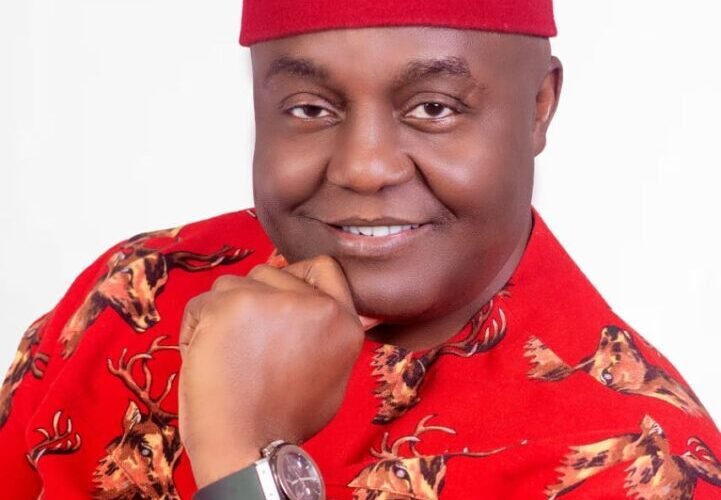
Abia Central 2027: Emeka Atuma and the Questions Constituents Should Ask Before Choosing Their Senator
Experience, equity, development and accountability in the Abia Central senatorial race
ABIA CENTRAL PUBLIC INFORMATION SERIES (FINAL EDITION)
As the 2027 elections draw closer, the real question for Abia Central is no longer simply who is seeking the senatorial seat, but what kind of representation constituents want to entrust with their mandate. From experience and legislative capacity to development, accessibility, accountability and equity, the choice deserves careful scrutiny.
What should Abia Central voters consider in 2027?
Constituents can examine candidates’ experience, legislative preparedness, development programmes, accessibility, accountability, capacity to attract federal opportunities and the question of equity and geographical inclusion before deciding whom to support.
For several editions, we have travelled through the critical questions confronting Abia Central Senatorial District; representation, infrastructure, human capital, employment, federal opportunities, education, healthcare, agriculture, women development, security and the relationship between Abuja and our communities. As this series concludes, all these issues converge around one fundamental democratic responsibility: the choice that the people themselves must make in 2027. Elections are ultimately not merely about who desires an office; they are about whom citizens, after examining the available alternatives, decide to entrust with their collective mandate.
Within that conversation stands Rt. Hon. Emeka Atuma, the APC candidate for Abia Central. His proposition is partly built around experience: he previously represented Ikwuano/Umuahia North/Umuahia South in the House of Representatives between 2003 and 2007, gaining direct exposure to the workings of the National Assembly. In the present campaign, he has publicly placed human-capital development, employment, education, healthcare, infrastructure, entrepreneurship, technology and accountable representation among his priorities. These are commitments that constituents are entitled to interrogate carefully rather than simply accept as campaign declarations.
The first question should therefore be about competence and legislative preparedness. Who understands what a Senator can constitutionally do? Who understands appropriation, committee processes, oversight, legislation and engagement with federal ministries, departments and agencies? Who can build alliances across party and regional boundaries without losing connection with the communities at home? Atuma has argued that his previous National Assembly service gives him institutional experience. Voters can examine that record, compare it with the credentials and programmes of the other candidates, and determine what weight such experience deserves.
There is, however, another consideration that has historically featured in Abia Central political discourse: equity, inclusion and geographical balance in representation. Since 1999, the Senatorial District has experienced representation from different parts of the district, including the two consecutive eight-year tenures of Senator Nkechi Nwaogu and Senator Theodore Orji. As constituents examine 2027, they are entitled to consider whether the historical distribution of the senatorial mandate among the component areas of Abia Central should carry weight alongside competence, experience and programme. Equity should not be reduced to an automatic entitlement, nor should geography substitute for capacity; rather, voters may ask whether fairness, inclusion, political accommodation and a sense of belonging across the district form part of the democratic balance they desire. Atuma’s candidacy therefore enters a conversation in which both his institutional credentials and the wider historical geography of representation can legitimately be examined.
The second question is about development and federal opportunities. Who presents the clearest programme for roads, erosion, electricity, healthcare, education, agriculture and economic development? Who explains how Abia Central’s young people can gain better access to skills, scholarships, employment, entrepreneurship and legitimate federal programmes? And who presents mechanisms rather than promises? Throughout this series, we have maintained an important distinction: a Senator is neither a governor nor a contractor. Effective senatorial representation depends substantially upon using legislation, appropriation, oversight, advocacy and institutional relationships to advance legitimate constituency interests.
Then comes the human-capital question. Political empowerment should not end with temporary distributions that disappear almost as quickly as they arrive. Constituents can ask which candidate offers sustainable pathways towards skills, careers, entrepreneurship and economic independence. Atuma has publicly argued for a form of youth empowerment centred on skills and meaningful career opportunities, including helping qualified young people access opportunities such as the federal civil service. That commitment should itself become measurable: if entrusted with the mandate, what structures, partnerships and transparent processes would turn those intentions into results?
There is equally the question of accessibility, accountability and character in public office. Will the next Senator disappear into Abuja after receiving the mandate, or maintain structured engagement with the people? Will communities know what their representative is sponsoring, pursuing and accomplishing? Will opportunities be transparently communicated rather than reserved for political associates? Atuma has publicly committed himself to accessibility, consultation, transparency and accountable representation. If elected, those promises should not be forgotten after inauguration; they should become standards against which his performance is periodically measured.
This is also where the Development Partners assume significance in the concluding conversation. Their stated concern throughout this project has been effective representation capable of yielding tangible dividends of democracy and accelerating the development of Abia Central. That objective should transcend the election itself. Development Partners, professionals, traditional institutions, community leaders, women, youths and organised groups can continue asking difficult questions of whoever ultimately receives the mandate: What has been promised? What has been pursued? What has been achieved? What remains outstanding? Political support acquires greater democratic value when it is accompanied by continuing accountability.
And so, as 2027 approaches, the people of Abia Central may ask themselves some defining questions: Who understands the institution he seeks to enter? Who presents the most credible programme for our communities? Whose record can be independently examined? Who demonstrates the capacity to negotiate Abuja’s complex institutional environment? Who will remain accessible after the votes are counted? Who can connect our farmers, entrepreneurs, professionals, women and youths with legitimate opportunities? What consideration should equity and geographical inclusion receive? And who has explained not merely what he wants to achieve, but how he proposes to achieve it? These questions belong to every voter, and each citizen must ultimately weigh the evidence and decide independently.
For Rt. Hon. Emeka Atuma, therefore, the conclusion of this series should not be treated as the conclusion of scrutiny. It should be the beginning of an even more demanding examination of his proposition. His previous National Assembly experience is part of the record. His stated priorities are now before the public. His campaign has promised responsible representation. The responsibility of the electorate is to interrogate those credentials alongside those of his opponents and determine which programme and record best reflect their own expectations for Abia Central.
The 2027 choice belongs to the people. It should be informed by evidence rather than sentiment, programmes rather than propaganda, competence rather than noise, and measurable commitments rather than empty promises. Questions of equity, inclusion and geographical balance may also form part of that democratic assessment, alongside experience, competence and capacity. Whoever receives the mandate will carry something greater than a political party’s flag: the hopes of communities, the aspirations of young people, the struggles of farmers and entrepreneurs, the expectations of professionals and workers, and the collective demand for an Abia Central whose voice is heard within the Nigerian federation. That mandate is precious. Let every constituent therefore examine the records, interrogate the promises, consider the history, compare the alternatives and make an informed decision worthy of the future we collectively desire.
THE SERIES ENDS, BUT ACCOUNTABILITY MUST CONTINUE.
ABIA CENTRAL PUBLIC INFORMATION SERIES
History • Issues • Representation • Accountability
The Record Has Been Presented.
The Issues Have Been Raised.
The Equity Question Has Been Placed on the Table.
The Questions Have Been Asked.
The Decision Belongs to the People.
Aguikwu Emma Ifeanyi, TPM

For publication of your news content, articles, videos or any other newsworthy materials, please send to famousreporters@gmail.com. For more enquiries, please call/WhatsApp: +2347034989575.