

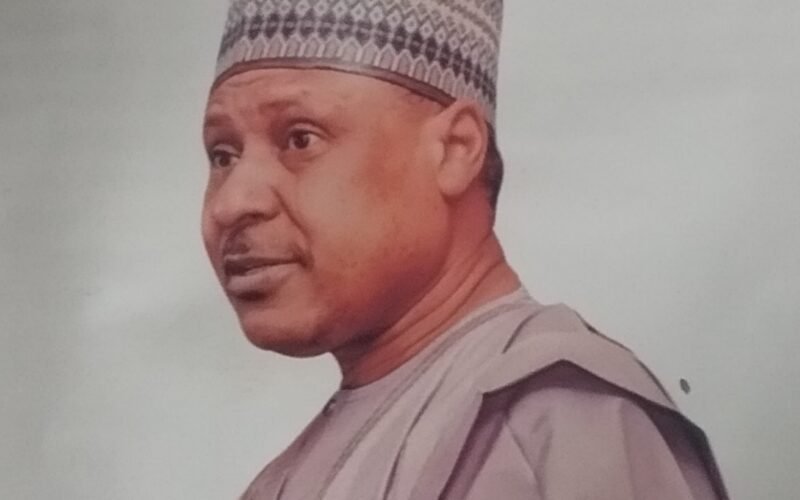
Mohammed Idris Announces Nigeria’s Digital Switch-Over Rollout, Ending 18 Years of DSO Delays
By Gilbert Kiaka Goodnews
ABUJA – After nearly two decades of broken promises, delays and missed deadlines, Nigeria is once again preparing for one of the biggest technological transformations in its history. If this latest timeline succeeds, millions of Nigerians could soon enjoy better television services, faster broadband expansion and fresh opportunities in the digital economy. But after years of setbacks, can the country finally deliver on its promise?
Nigeria has announced June 17, 2026, as the official nationwide rollout date for its long-delayed Digital Switch-Over (DSO) programme. According to the Federal Government, analogue television broadcasting will be completely phased out by December 31, 2028. The transition is expected to improve television quality, expand free-to-air digital channels, boost broadband infrastructure and unlock billions of naira in economic opportunities.
After almost 18 years of delays, policy reversals and missed deadlines, Nigeria’s long-awaited Digital Switch-Over (DSO) programme may finally be entering its most decisive phase.
The Minister of Information and National Orientation, Mohammed Idris, has announced June 17, 2026, as the official date for the nationwide rollout of the digital television migration, while the complete shutdown of analogue broadcasting is expected by December 31, 2028.
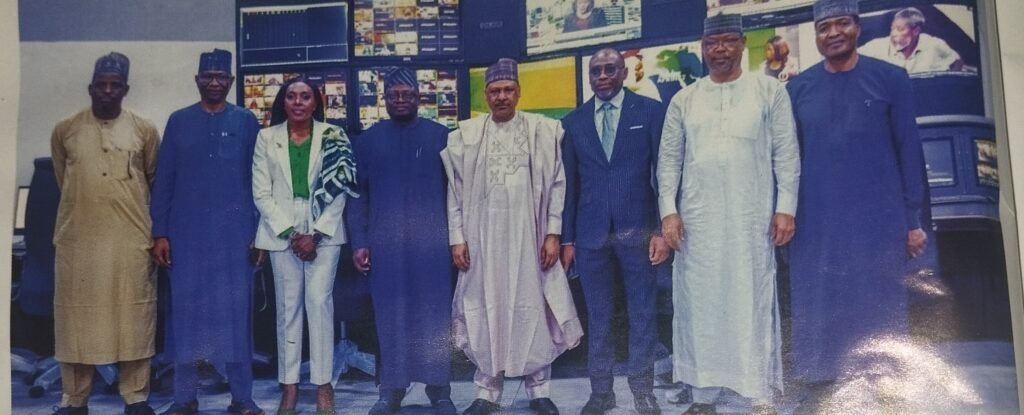
For millions of Nigerians, the announcement represents far more than a technological upgrade. It offers renewed hope for the rebirth of Nigeria’s broadcasting industry, greater access to quality television services and a significant step towards building a stronger digital economy.
An 18-Year Journey Filled with Delays
Nigeria officially committed to migrating from analogue to digital television broadcasting in 2008, following the directive of the International Telecommunication Union (ITU).
The migration promised numerous benefits, including:
Better picture and sound quality.
More television channels.
Efficient use of the broadcast spectrum.
Stronger media and telecommunications industries.
Increased economic opportunities.
However, the ambitious project soon became one of Nigeria’s longest-running technology initiatives.
Over the years, the DSO programme was slowed by funding shortages, bureaucratic bottlenecks, inconsistent government policies and changing political priorities. Consequently, Nigeria failed to meet the ITU’s global deadline of 2015, falling behind several African countries that completed their digital migration years earlier.
Pilot Successes, But Nationwide Rollout Stalled
The country’s first breakthrough came on April 30, 2016, when Jos, Plateau State, became Nigeria’s first digital broadcasting city.
Later, Lagos switched over on April 29, 2021, followed by Rivers State on July 8, 2021, and Kano on November 2, 2021. Other states, including Kwara, Osun and Enugu, also joined the gradual transition.
Nevertheless, most Nigerians continued to depend on analogue television signals as nationwide implementation repeatedly stalled.
Between 2017 and 2023, several rollout dates were announced but later postponed due to financial constraints, policy shifts and political transitions.
Over ₦60 Billion Invested
Since the project’s inception, more than ₦60 billion has reportedly been invested in the DSO programme.
The funds were used to subsidise digital set-top boxes, build transmission infrastructure and implement pilot projects in cities including Jos, Abuja and Lagos.
Despite the huge investment, nationwide results remained limited.
However, the administration of President Bola Ahmed Tinubu has renewed efforts to complete the migration.
In August 2024, the National Broadcasting Commission (NBC), under the leadership of Director-General Charles Ebuebu, announced an aggressive expansion of digital television coverage. The renewed drive was backed by a ₦10 billion presidential grant approved by President Tinubu.
As a result, optimism surrounding the project has grown considerably.
Why the Digital Switch-Over Matters
If fully implemented, the DSO programme could become one of the most transformative developments in Nigeria’s media and technology sectors.
According to the NBC, the digital migration is projected to:
Generate over ₦605 billion in advertising revenue.
Earn more than $1 billion from digital spectrum auctions.
Deliver more than 100 free-to-air high-definition television channels to Nigerians.
Improve picture and sound quality nationwide.
Expand broadband infrastructure through the release of valuable spectrum.
Stimulate investment in broadcasting and telecommunications.
Furthermore, the transition is expected to strengthen Nigeria’s creative economy.
More television channels could create fresh opportunities for filmmakers, journalists, musicians, advertisers, content creators and independent producers. It is also expected to create thousands of new jobs while encouraging greater local content production and media diversity.
In addition, the release of the valuable 700MHz and 800MHz spectrum bands, currently occupied by analogue broadcasting, will support faster broadband expansion and improved telecommunications services across the country.
Challenges Still Remain
Despite the renewed optimism, many Nigerians remain cautious.
Years of missed deadlines have weakened public confidence in the project.
Several critical concerns still require attention, including:
Affordability of digital set-top boxes.
Public awareness and consumer education.
Electricity supply.
Broadcast infrastructure readiness.
Accessibility for rural communities.
These challenges will largely determine whether the latest rollout succeeds where previous attempts failed.
Nigeria Still Playing Catch-Up
Nigeria’s slow migration has placed it behind several African countries that have already completed the transition to digital broadcasting.
Countries including Mauritius, Rwanda, Tanzania, Kenya, Botswana, Namibia, Côte d’Ivoire, Burkina Faso, Gabon and Eswatini have successfully completed their digital migration programmes, increasing pressure on Africa’s largest economy to close the gap.
A Defining Moment for Nigeria’s Digital Future
Nevertheless, there is a growing belief that Nigeria may finally be approaching the finish line.
For a country seeking to modernise its broadcasting industry and diversify its economy, the Digital Switch-Over programme represents much more than the end of analogue television.
It is an opportunity to reverse years of policy stagnation, strengthen digital infrastructure and reposition Nigeria within the global digital economy.
If the nationwide rollout scheduled for June 17, 2026, proceeds as planned, history may remember the moment not simply as the end of analogue broadcasting, but as the beginning of a new era of innovation, digital connectivity and economic growth.
For publication of your news content, articles, videos or any other newsworthy materials, please send to famousreporters@gmail.com. For more enquiries, please call/WhatsApp: +2347034989575.


