Iran Rules Out US Talks as Ali Larijani Slams Trump Amid Escalating Israel Conflict
“Tensions in the Middle East have sharply intensified after senior Iranian official Ali Larijani publicly ruled out any negotiations with the United States, dismissing reports of backchannel diplomacy and sharply criticizing former U.S. President Donald Trump. The remarks come amid a dramatic escalation that has further destabilized the region and drawn global attention.”
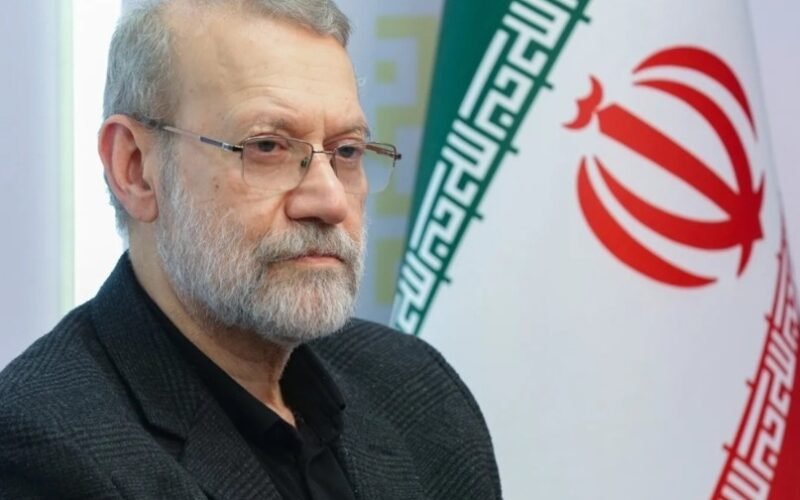
Ali Larijani, one of Iran’s most influential political figures and secretary of the Supreme National Security Council, said in a post on X that Tehran has “no plan to negotiate” with Washington. He was responding to media reports claiming Iran had reached out to the United States through intermediaries to revive stalled talks.
Larijani rejected those reports and directly criticized Trump, stating that the former U.S. president had “caused chaos in the region with his ‘false hopes’ and is now concerned about more American soldiers getting hurt.”

“With his crazy actions, he has changed his own slogan of ‘America First’ into ‘Israel First’ and is willing to send American soldiers to support Israel’s search for power,” Larijani wrote.
A former senior adviser to the late Supreme Leader Ayatollah Ali Khamenei, Larijani also insisted that Iranian forces “did not start the invasion,” pushing back against claims that Tehran initiated the current hostilities.
The developments follow Israeli military strikes that reportedly killed Supreme Leader Ayatollah Ali Khamenei after his residence was hit. According to official statements, Khamenei died alongside several members of his family, including his daughter, grandchild, son-in-law, and daughter-in-law.
The Israeli army also announced that Ali Shamkhani, a senior adviser to Khamenei, and General Mohammad Pakpour, head of Iran’s Islamic Revolutionary Guard Corps (IRGC), were killed in the strikes.
The rapidly unfolding events mark a critical turning point in the long-running tensions between Iran, Israel, and the United States, raising fears of broader regional instability and potential international involvement.
As diplomatic channels appear to close and rhetoric escalates, the global community is closely watching whether the situation spirals into a wider confrontation.